
[Co-packaged Optics (CPO) Implementation Technology] Why is CPO Expected? - Benefits and Challenges of Adoption -


About this article
This article explains the mechanism of CPO, its differences from LPO, its effects on data centers, and the main technical challenges during implementation.What is CPO? Increasing power loads due to AI adoption and the next option after LPO
With the spread of AI, the processing power required for data centers has increased significantly. As a result, challenges such as "increased power consumption" and "difficulty in cooling server equipment" have emerged. Against this backdrop, a next-generation technology called "CPO (Co-Packaged Optics)" is attracting attention.
Mechanism and Role of CPO
CPO is a packaging technology that places the following two components within the same package or in very close proximity.
- Logic chip (ASIC): A component that processes data at high speed
- Optical transceiver: Converts electrical signals into light for transmission
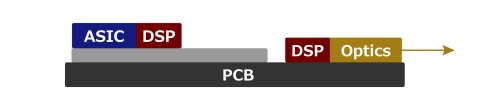
Conventionally, the logic chip and the optical transceiver were two separate components on the board, connected by long copper wiring.
Conventional
CPO
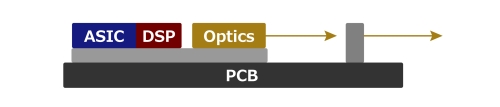
With CPO, by structurally shortening this wiring, it is expected that signal degradation will be minimized, and the power and complex circuitry required for compensation will be significantly reduced.
Overview of LPO and Differences from CPO
LPO (Linear Pluggable Optics) is a technology that utilizes the conventional pluggable optical module form factor. By designing it with reduced signal compensation processing, power consumption can be lowered.
Advantages of LPO
- Easier component procurement
- Power savings without changing existing operational methods
Disadvantages of LPO
- The length of electrical wiring remains unchanged
- The issue of signal degradation due to wiring is not fundamentally resolved
In contrast, CPO is a method that significantly shortens wiring distance, addressing challenges from the design stage. For this reason, expectations for CPO are rising rapidly.
Comparison Image
LPO
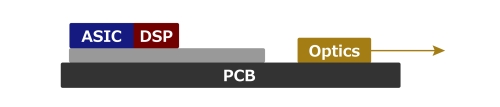
CPO
Benefits of introducing CPO
The introduction of CPO primarily provides the following three benefits.
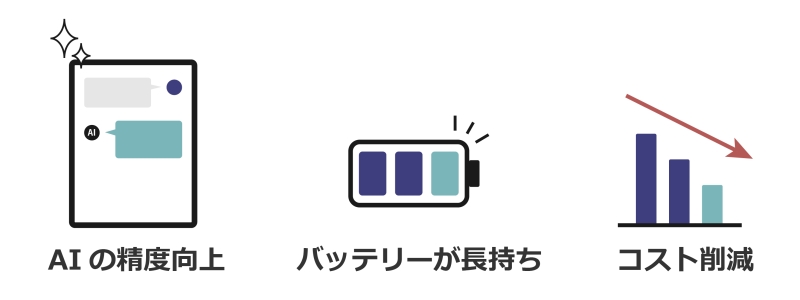
- Significant reduction in power consumption
By replacing wiring with optical wiring, CPO prevents signal degradation (weakening/distortion) caused by long-distance electrical wiring. Power consumption in the I/O section can be reduced to approximately 30% compared to conventional methods. - Improved device performance through better cooling efficiency
By reducing power consumption, the energy previously allocated to cooling can be utilized elsewhere. Since more processing equipment can be mounted in a device of the same size, this leads to improved computational power. - Achieving business expansion through low-cost operation
Initial investment and operating costs are significantly reduced, allowing those management resources to be allocated to data center expansion and AI development. This enables the provision of more advanced AI services and promotes the development of the industry as a whole.
Ripple effects
Challenges in CPO development
Addressing temperature dependency
In CPO, since high-heat chips and temperature-sensitive optical components are in the same package, thermal management becomes the biggest challenge. It is necessary not just to dissipate heat, but to keep the temperature in a stable state. In addition, multiple measures such as cooling performance and material selection are required.
Maintainability and replaceability
In conventional methods, it was possible to replace only the failed component, but in CPO, optical processing is integrated within the package. Since the entire device must be replaced in the event of a failure, increased recovery work and maintenance costs are a challenge.
Mass production technology and yield
Alignment accuracy is critical in the optical signal connection process. Because even a slight misalignment affects the signal, maintaining uniform quality as production volume increases is a challenge. In mass production, the number of products requiring re-inspection and re-adjustment tends to increase, which can lead to a sharp rise in associated correction costs.
The necessity of yield improvement
Because the proportion of process costs for assembly and testing is high, not just material costs, ingenuity is required to reduce the cost per unit even as production volume increases. By improving yields and automating processes, the cost per unit can be kept down.
Next-generation cooling technology: "Microfluidic Cooling"
As a technology to solve CPO cooling challenges, companies such as Microsoft in the U.S. have announced "Microfluidic Cooling," which circulates coolant directly on the back of the chip.
Point 1 Up to 3x heat removal effect
By forming hair-thin grooves (microchannels) on the back of the silicon chip and circulating liquid coolant directly, the heat removal effect is significantly improved compared to conventional cooling plate methods. As a result, up to 3x the heat removal effect can be achieved, reducing the maximum GPU temperature rise by approximately 65%.
Point 2 The manufacturing challenge of "preventing liquid leaks"
Because microfluidic cooling has a structure that circulates liquid coolant directly, it is crucial to prevent coolant leaks. To address such challenges, the design of leak-proof packaging to reliably contain the coolant and a sealing process that can hermetically seal the microchannels without gaps are required.
Source: Official Microsoft video on YouTube
(Introducing microfluidic cooling: a breakthrough in chip cooling technology / https://www.youtube.com/watch?v=MZBwLi3ajYE)
Summary
While CPO holds the promise of significant benefits, its development presents many challenges. To realize it, professional support at every stage, from thermal design to mass production, is essential. We are here to support you with these implementation challenges. Please consider our solutions.
Recommended Catalogs
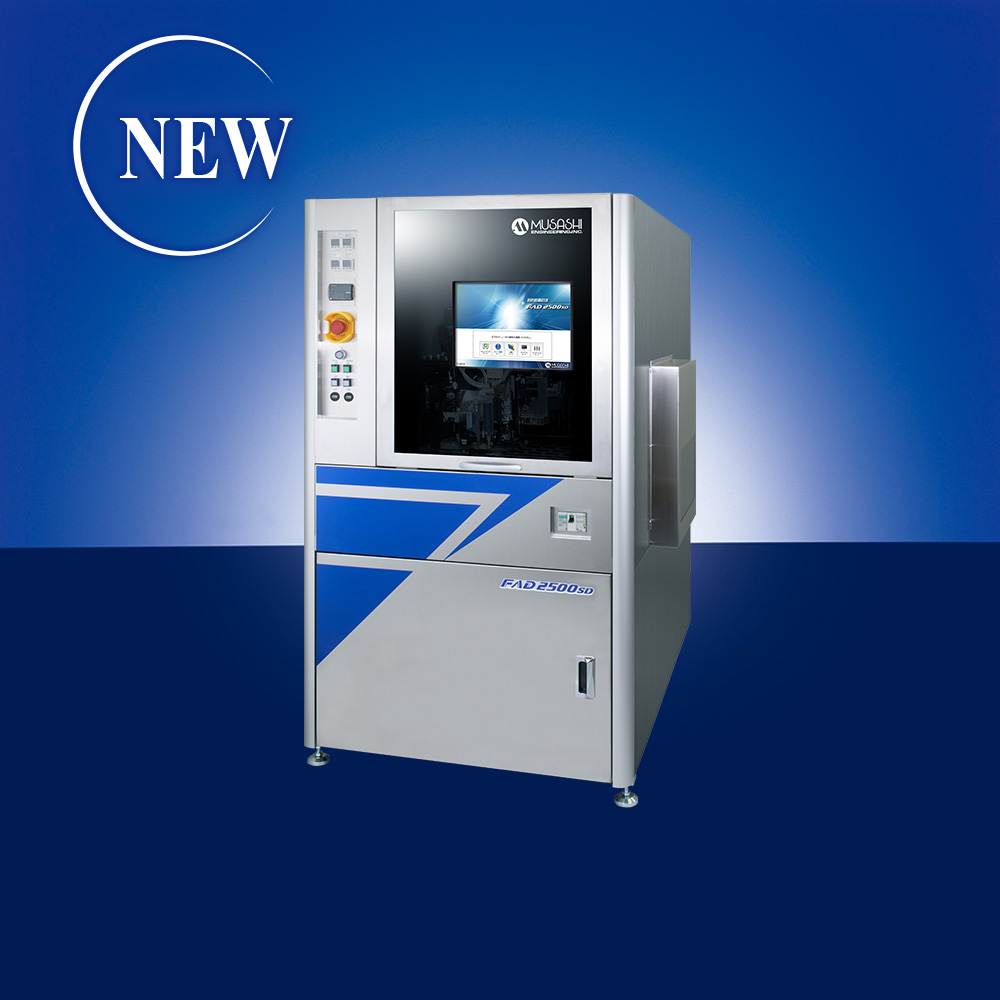
Fully automatic dispensing system
FAD2500SD
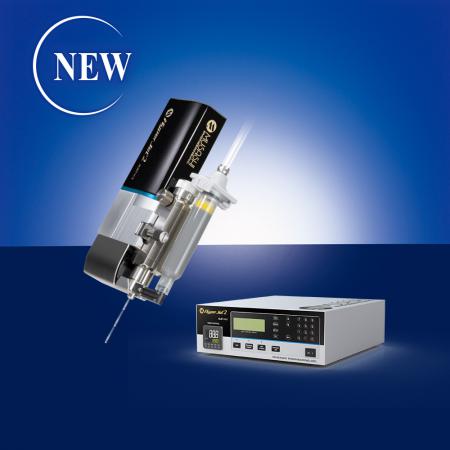
Jet Dispenser
HyperJet2
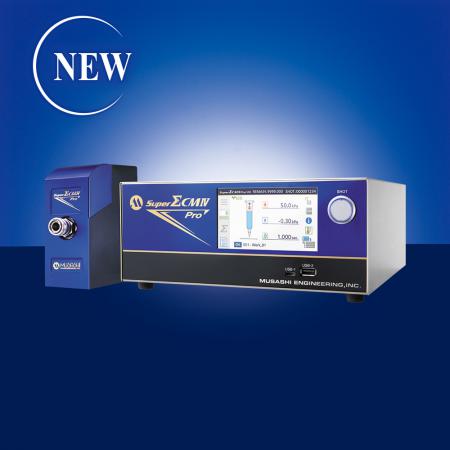
Air Pulse Dispenser
SuperΣCMⅣ Pro
Volumetric Dispenser
MPP-5-S