
What is a 3D Food Printer? | Explaining Food Modeling with 3D Printers!


In this article, we will delve into why 3D food printers are attracting attention, their technical mechanisms, and how they contribute to reducing food loss. We will also explain advanced case studies that are currently being implemented.
- What is a 3D Food Printer?
- Why 3D Food Printers are Attracting Attention
- [Case Study] Tackling Food Loss
- [Case Study] Nursing Care Food, Alternative Meat, and 3D Food Printers - French Cuisine and Kakuni (Braised Pork Belly) -
- How 3D Food Printers Work
- Implementation Process and Contact Information
- Musashi Engineering's 3D food printer
- Recommended Catalogs
What is a 3D food printer?
It is a device that applies 3D printer technology to form and manufacture food in three dimensions. While standard 3D printers use materials like plastic or metal, 3D food printers use food-grade materials (such as chocolate, paste-like ingredients, and dough). This makes it possible to create food with designed shapes and structures.
For an easy-to-understand example, please look at the following photo of soft-serve ice cream.
Soft-serve ice cream maker
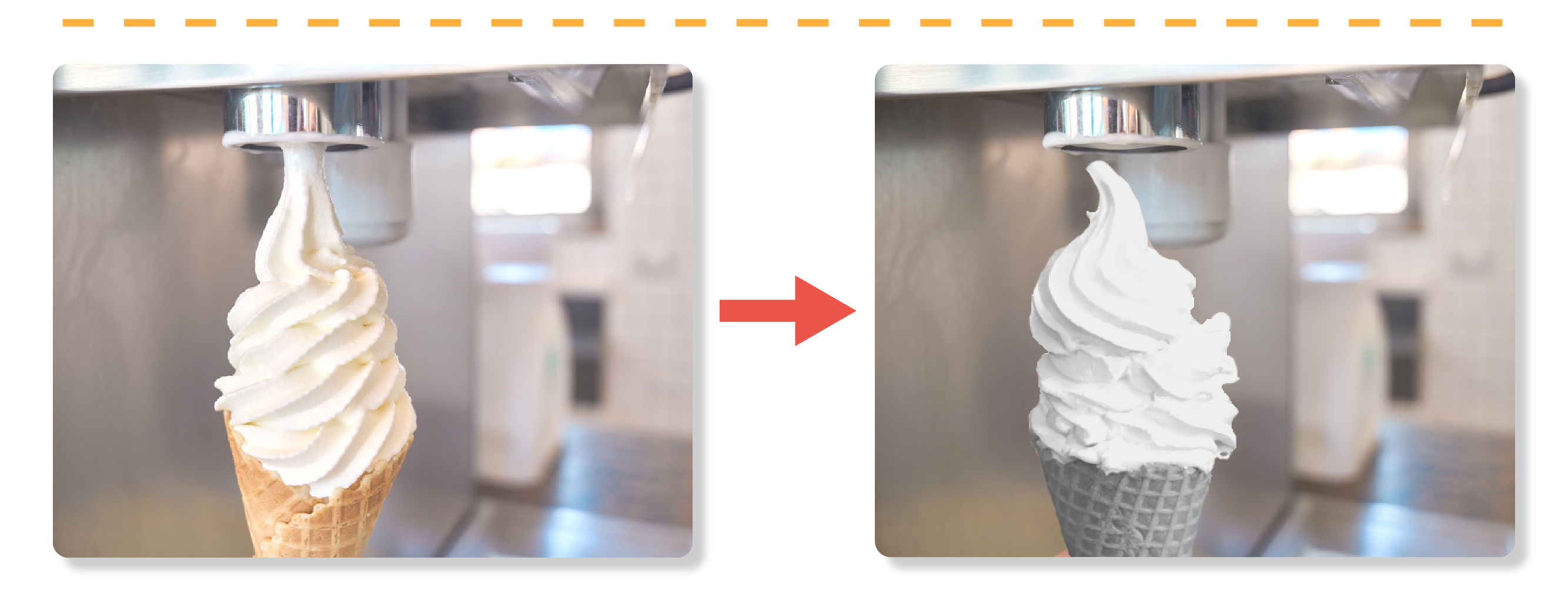
If the movement is poor, the shape will collapse
Even if the speed and amount of soft-serve ice cream being dispensed from the machine are kept constant, if the movement of the cone is un stable, the shape of the soft-serve ice cream will collapse. The same applies to 3D food printers.
With a 3D food printer, you cannot consistently create the desired shape if you only have dispensing technology or only have motion technology. To perform high-quality "3D modeling," it is important to control both dispensing and motion with high precision "simultaneously."
Why 3D food printers are attracting attention
The spotlight on 3D food printers is driven by challenges in traditional food systems and a strong need for efficient ingredient utilization.
In the conventional mass-production and mass-disposal system, a large amount of non-standard vegetables and livestock products are generated, and the costs and waste associated with their disposal have become a major social issue. In agricultural production, in particular, there are many cases where produce is uneven in shape or hard parts are discarded, and even edible parts are often thrown away. Waste also easily occurs in the transport and storage of ingredients, and finding solutions for these issues has been a long-standing challenge.
Against this backdrop, new processing technologies are in demand. Technology that turns ingredients into a paste and shapes them allows for the effective use of materials regardless of their shape or hardness, making it easier to reuse scraps generated during production and parts that were previously discarded. Furthermore, the features of 3D food printers are becoming valuable in meeting the diversifying needs of consumers, such as for meat alternatives and nursing care food.
In addition, restaurants and hotels overseas are introducing 3D food printers and applying them to limited-time menus using ingredients that tend to be left over each season. Business expansion is also accelerating, with uniquely designed desserts and sustainable foods using nutrient-rich plant-based pastes. Given these global trends, it is believed that there is significant potential for future market expansion.
- Nursing care food
- Meat alternatives
- Custom-made food
- Elimination of food waste
[Case Study] Tackling Food Waste
We introduce an advanced case study of a 3D food printer conducted through joint research with the Aichi Industrial Technology Institute, focusing on the utilization of unused resources.
※Materials provided by: Aichi Industrial Technology Institute, Food Research Center
MP Gokyo Food & Chemical Co., Ltd.
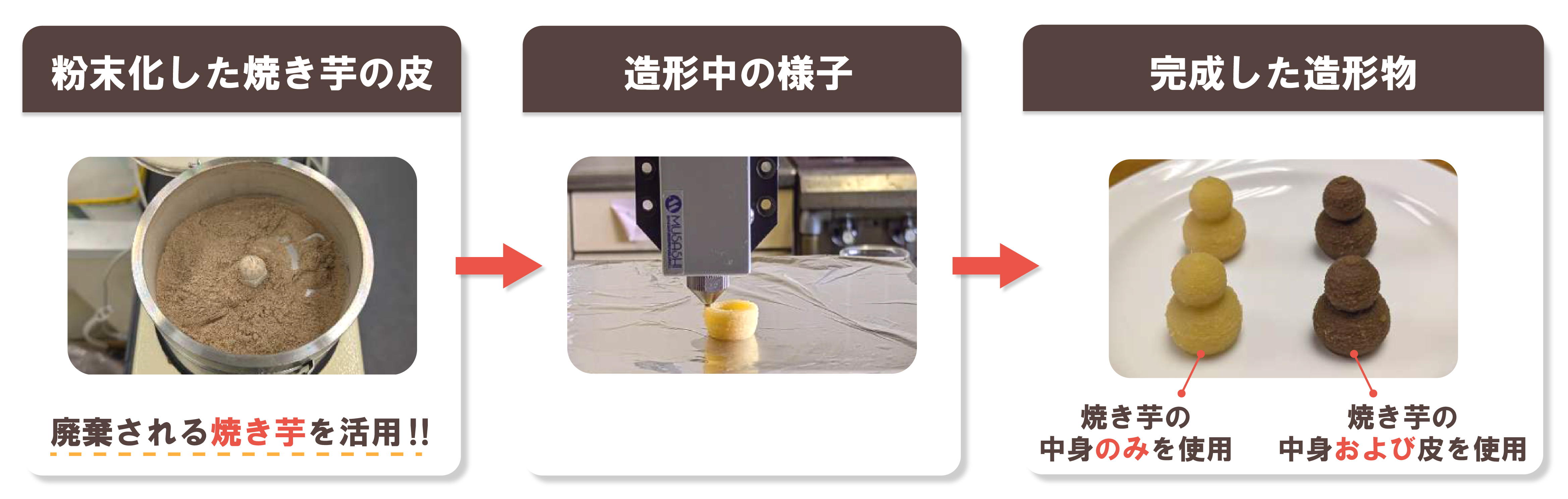
Effective use of roasted sweet potato skins
We worked on 3D modeling using roasted sweet potato skins. Usually, roasted sweet potato skins are often avoided because they are "hard" or "bitter," and they are discarded, contributing to food waste. Therefore, we dried the roasted sweet potato skins in a microwave and pulverized them into a powder. We then added a few percent of this powder as an ingredient for 3D modeling. As a result, we achieved a smooth finish comparable to using only the inside of the sweet potato.
Evolving Food Additives & 3D Food Printers
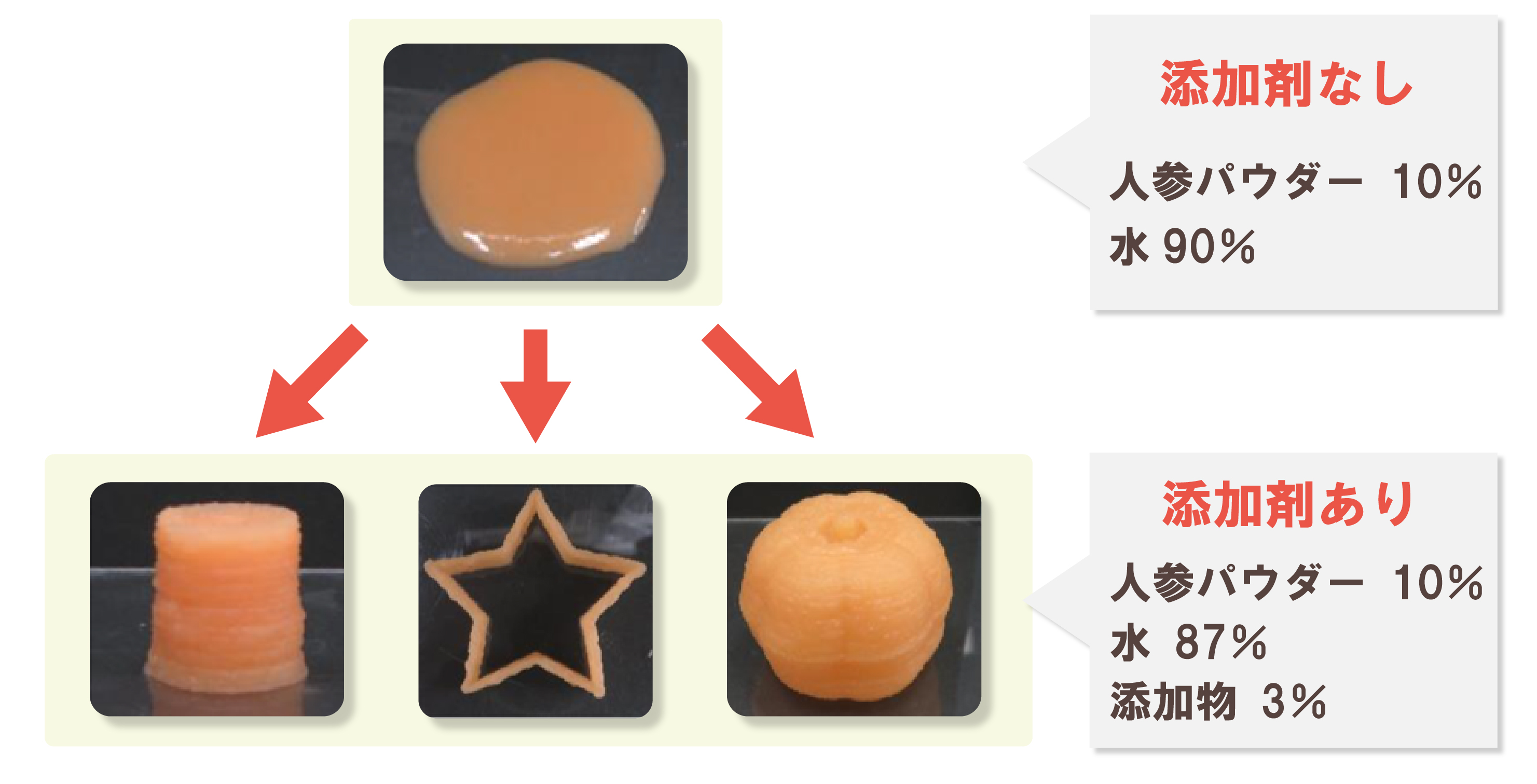
We will introduce in more detail the specific process of how powdered ingredients are modeled with a 3D food printer.For example, if 90% water is added to carrot powder, the material becomes liquid. On the other hand, if the amount of water is too low, it will be crumbly and fail to hold together. Also, because results vary depending on the properties of the powder, such as its water absorbency, a lot of trial and error is required to find the right proportions for 3D modeling.
Additives are useful for solving these problems inherent in the materials themselves. Even with highly fluid materials like water, adding additives can provide viscosity and allow the shape to be maintained. Furthermore, by combining this with 3D food printer technology, it is possible to achieve three-dimensional modeling.
It also holds the potential to add new value and functionality (e.g., texture and flavor) to the original material.
Achieving 3D modeling!
prepared and provided by MP Gokyo Food & Chemical Co., Ltd. (patented by the company)
In this way, by utilizing vegetable scraps and ingredients scheduled for disposal as materials for 3D food printers, the possibilities for new food recycling expand. Furthermore, the development of food ink using unused fish in addition to vegetables has begun, and expectations for sustainable food manufacturing through the use of unused resources are rising.
[Case Study] Nursing Care Food, Meat Alternatives, and 3D Food Printers - French Cuisine and Kakuni (Braised Pork Belly) -
Demand for 3D food printers is increasing in the fields of nursing care food and meat alternatives. We will introduce the background of these needs and specific case studies of our dispenser introductions.
Materials provided by: Tokyo Medical and Dental University (currently: Institute of Science Tokyo), and a chef who creates dysphagia-friendly French cuisineMP Gokyo Food & Chemical Co., Ltd.
The necessity of nursing care food
Japan is an aging society, with about 30% of the total population being elderly people aged 65 or older. 60% of those elderly people are prone to undernutrition, and undernutrition affects illnesses and delays in recovery. It can be said that it is important for the elderly to consume the necessary meals and nutrition even as they age.
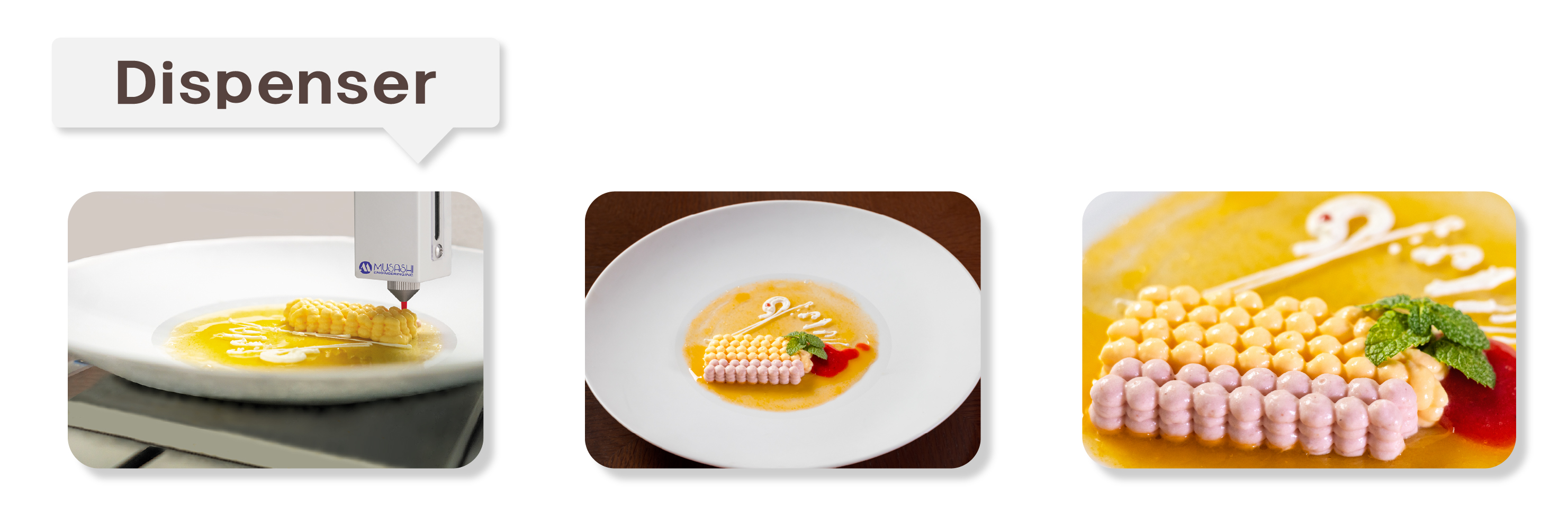
The following photo is an example of nursing care food. It is a photo of a dish created when Tokyo Medical and Dental University (currently: Institute of Science Tokyo) collaborated with a chef who also creates dysphagia-friendly French cuisine. It features 2D application using fresh cream to create the image of a swan, and a 3D creative mousse dish made of a collection of spheres. The ability to perform modeling from 2D to 3D with a single food printer is possible due to the application of our dispensing technology, which is unique to our company.With a beautiful appearance, you can enjoy meals with both your eyes and your palate.
The necessity of meat alternatives
Meat alternatives play a role in reducing environmental impact and help realize sustainable food supply. Japan's population is on a downward trend, but the global population is increasing. Compared to producing conventional meat (livestock), it requires fewer materials and less water, enabling efficient production. It is also said that it will lead to solving the problem of the "protein crisis" that will accompany the increase in the world population.
The following photo is an example of reproducing Kakuni (braised pork belly).
Normally, pork is used, but for calorie control or vegan compatibility, it is possible to select ingredients tailored to an individual's physical constitution, beliefs, and preferences, such as using chicken paste or plant-based soy as a base. For the fatty part, we used an additive (gelling agent) that gives a fat-like texture without using fats or oils this time, but it is also possible to utilize natural ingredients such as coconut oil.
Also, we added a boiled egg as a side dish for the Kakuni. We would especially like you to pay attention to the shape of the yolk. We incorporated a playful touch and designed it in the shape of a bear to attract the interest of small children.
By utilizing its technology, the 3D food printer has the potential to not only pursue realistic textures but also create entirely new food experiences.
We reproduced the taste and appearance of Kakuni.
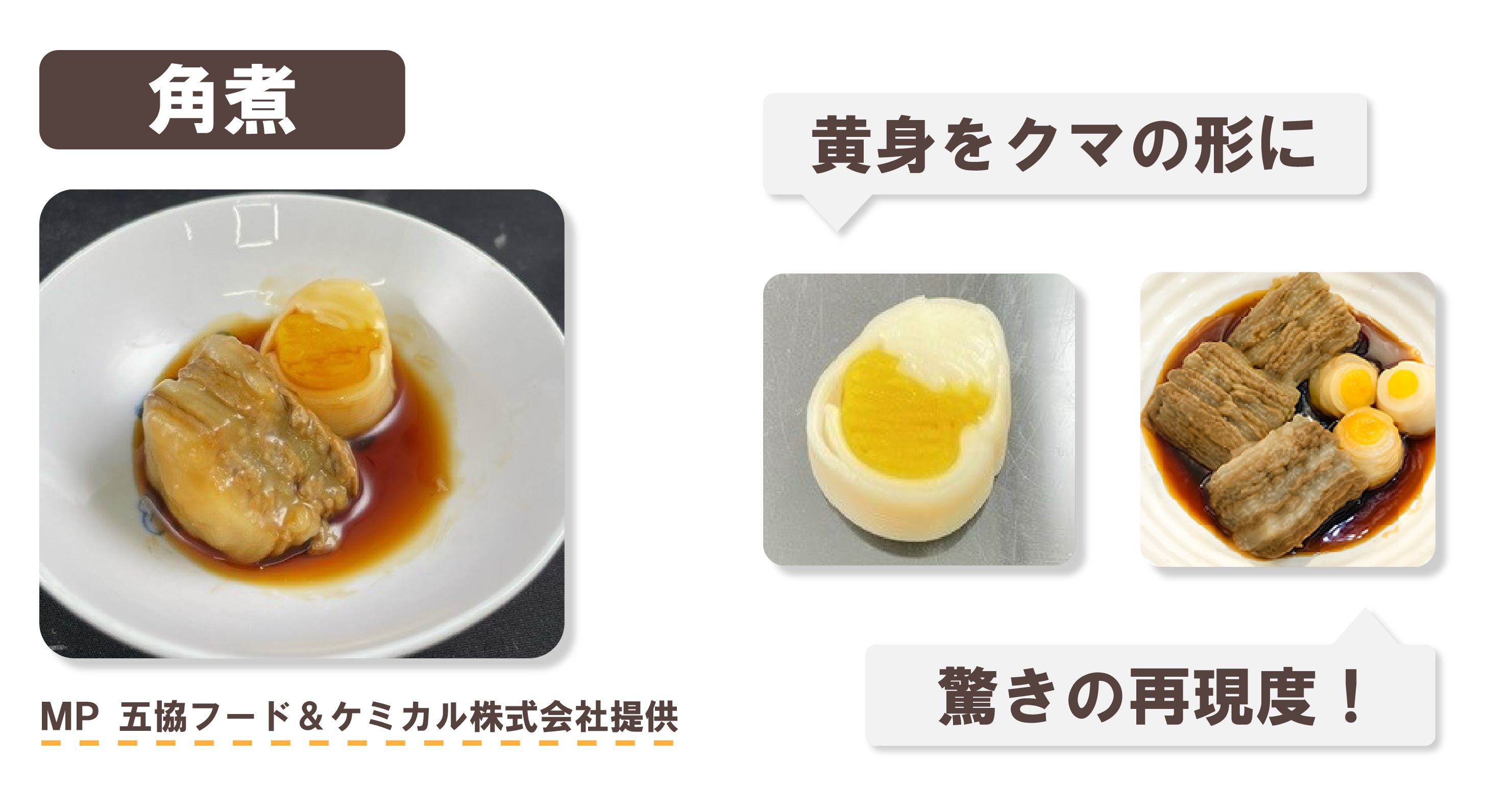
Instead of using pork, we substituted it with chicken paste, soy, and rice gel!
Mechanism of 3D food printers
We will introduce the data creation and procedures for operating a 3D food printer.
Basic procedures
Although the procedures may differ depending on the modeling method, basically, the following steps are required to operate a 3D printer.
- Preparation of 3D data (format: STL)
For example, use data acquired using a 3D scanner. - Create G-code data with slicing software
Import 3D data into slicing software and convert it to G-code. This G-code becomes the data for the 3D printer to read.
In the case of our food printers
From here, we will explain the procedure for our food printers. We offer Mu-SLICER, our original slicing software, which allows for easy operation if you have 3D data.
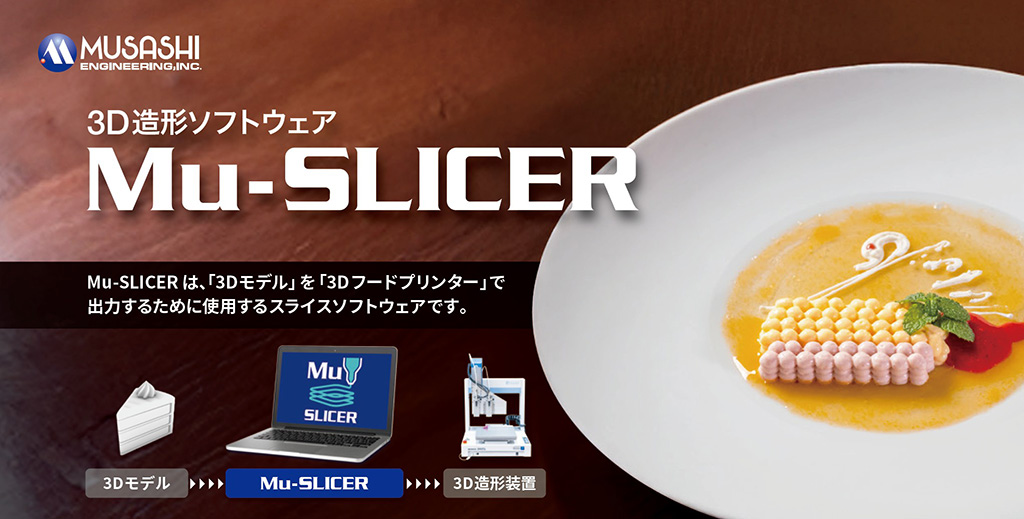
Mu-SLICER is slicing software developed independently by our company. It condenses the know-how regarding drawing that we have cultivated in the dispenser industry and is software packed with the functions necessary for a 3D food printer to control liquid materials.
Furthermore, for those who want to start 3D modeling, there is free software called "3D Builder," which allows anyone to easily create 3D data for simple shapes.
We provide extensive support, not only for the dispensing part that outputs and models materials, but also for the creation of program data and operational follow-up.
Multi-pattern modeling example: Chocolate ornament
We apply the core technology of dispensing technology to 3D food printers. With this technology, it is possible to realize a wide variety of modeling patterns with a single printer, from 2D drawing and ornament making to 3D modeling. In addition to its use as a 3D food printer, for applications where production capacity is required, we believe that combining it with 2D modeling can lead to even more innovative product development.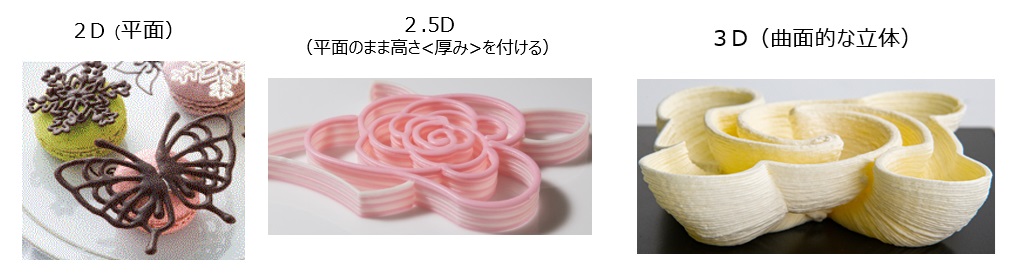
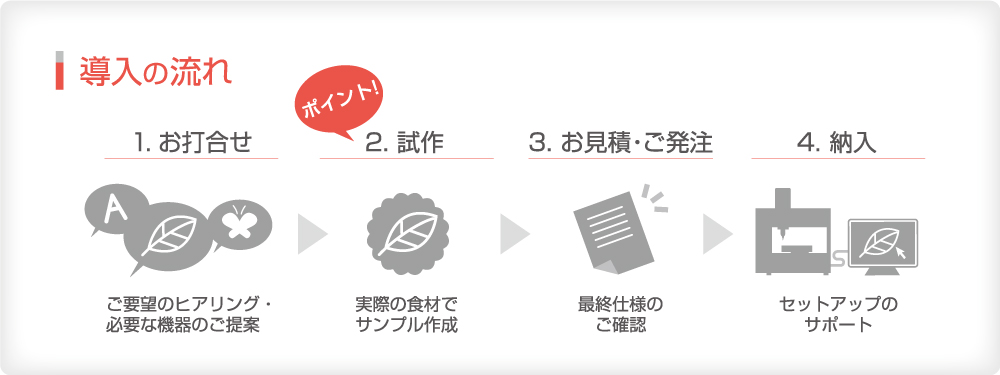
Introduction flow and contact information
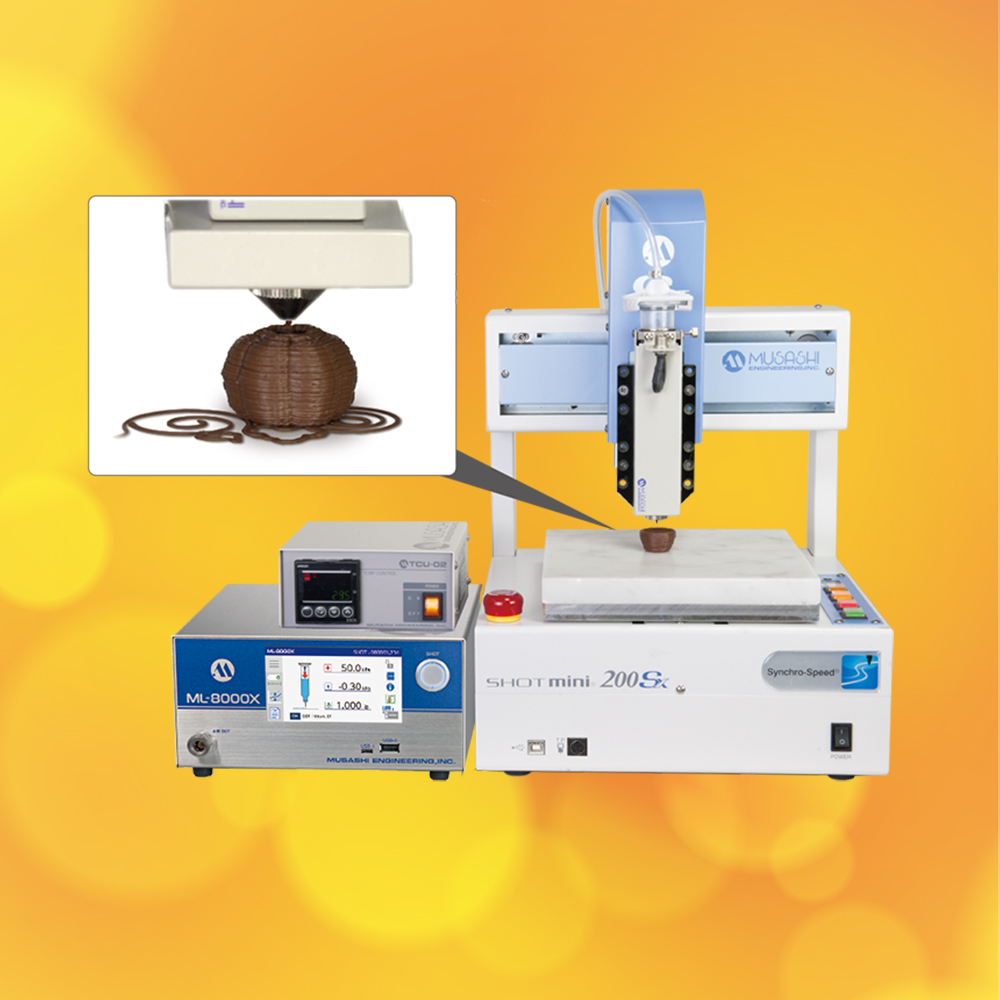
Musashi Engineering's 3D food printer
3D food printer
- Create diverse shapes based on 3D data. Supports everything from chocolate to fish paste.
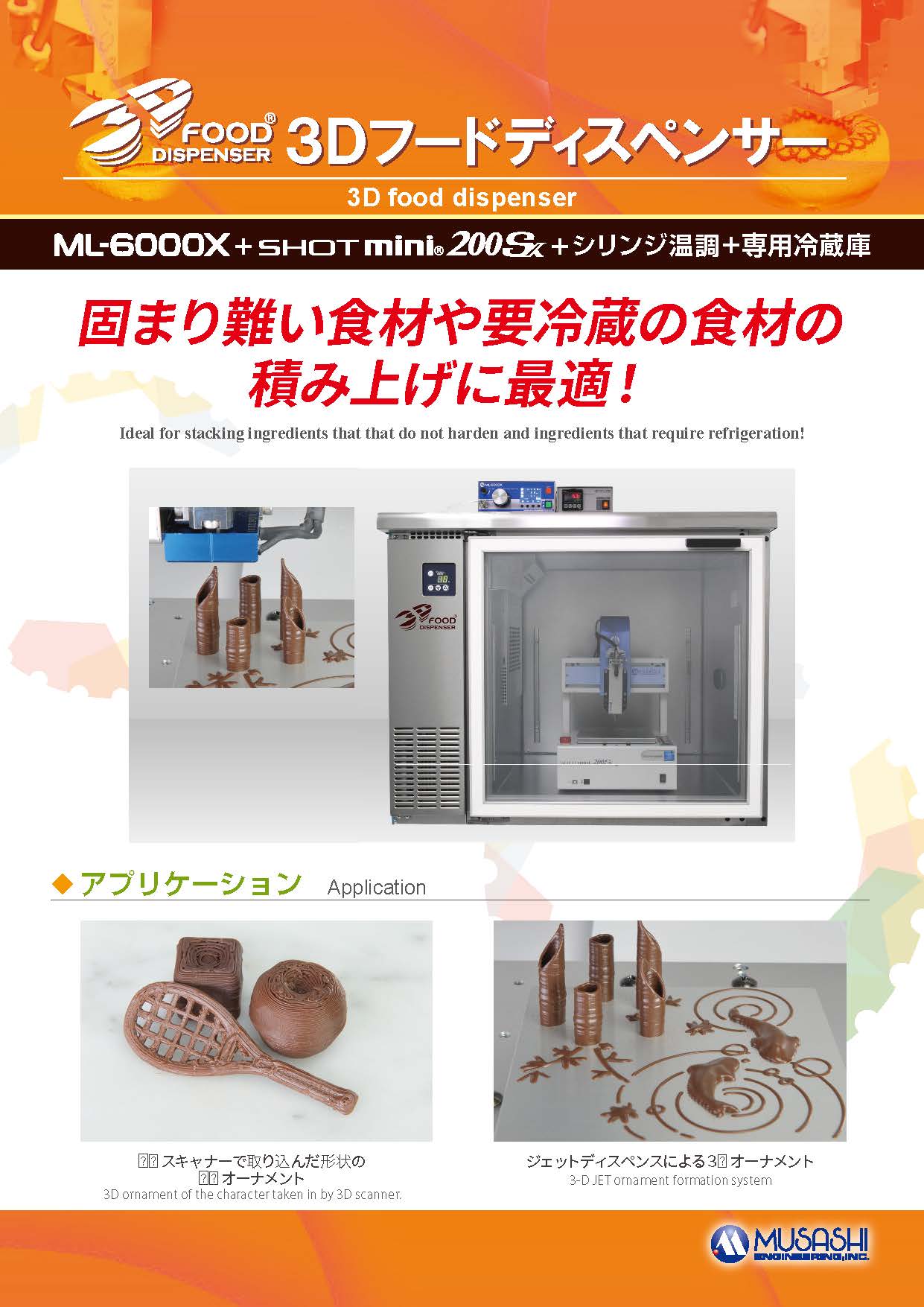
Recommended catalogs
Solutions for the food industry

3D food printer
3DJET ornament modeling system

Hard candy modeling system