

What is a 2-component mixing dispenser? Explaining the basics of 2-component mixing dispensing equipment!


What is a 2-part mixing dispenser?
Also known as a "2-part dispenser" or "2-part mixing dispensing system," this device precisely mixes and dispenses two liquids with different components. It features an advanced mechanism to maintain a uniform mixing ratio, enabling efficient application work in manufacturing settings. 2-part mixing dispensers play an indispensable role in manufacturing industries where application precision is required.
Basic principles and features of 2-part mixing dispensers
The basic principle of a 2-part mixing dispenser is to mix two types of liquids at an accurate ratio and dispense them in a uniform state. Increasing the precision of the mixing ratio is extremely important for ensuring the performance of 2-part curing agents. If they cannot be mixed accurately, product issues such as curing failure may occur, but a 2-part mixing dispenser can prevent such risks. Furthermore, precise and accurate dispensing by the dispenser ensures material uniformity and streamlines the manufacturing process.
Compatible materials and their main applications
Examples of liquid agents applied with a two-component mixing dispenser include epoxy-based adhesives and urethane-based sealants. These two-component liquids are used in applications that require high adhesive strength and flexibility.
Epoxy resins are used for encapsulating electronic components and protecting circuit boards due to their electrical insulation properties, while urethane resins are applied to cushioning materials and sealing parts by leveraging their high flexibility. They are used in fields such as automotive electronics, smartphones, and construction for applications requiring high strength and weather resistance, as well as for the encapsulation of electronic components and circuit boards.
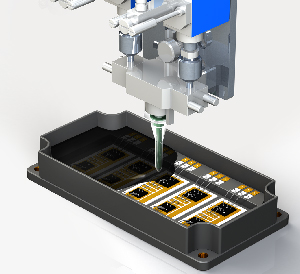
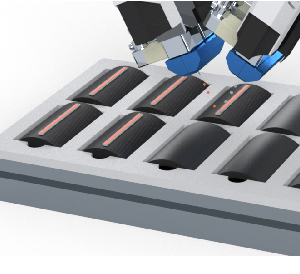
The mixing process and the roles of dispensers and mixers
The two-component mixing process consists of the supply and mixing of two liquid agents. The dispenser is responsible for accurate material supply and dispensing, while the mixer enables efficient and consistent mixing.
Precise liquid mixing through a high-precision mixing process ensures that two-component agents perform according to their specifications. Mixers include static mixers and rotary mixers (see image). By combining dispensers and mixers, it is possible to accommodate various operating conditions and materials, and this technology is widely adopted throughout the industry.
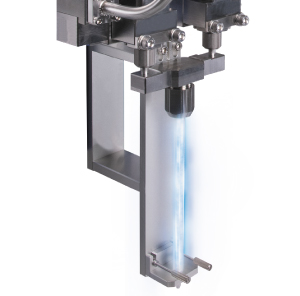 A static mixer is mainly composed of specially shaped parts installed inside a tube. As the fluid passes through the pipe, these parts split the fluid flow and change its direction, which plays a role in mixing it uniformly.
It can mix without using electricity, and because the parts have no moving components, it is characterized by being durable and easy to maintain.
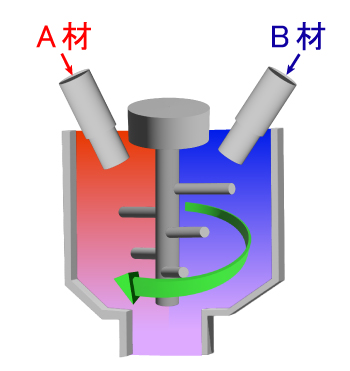 A rotary mixer contains a "screw-shaped" part or blades inside a long, thin cylinder, and it mixes the two liquids by rotating them at an appropriate speed suited to the liquid agents. You can imagine it as a machine automatically performing the task of stirring a mixed juice with a muddler.
Because the strength of the mixing can be controlled to some extent by changing the motor's rotation speed, it is characterized by the ability to make adjustments, such as ensuring thorough mixing even for high-viscosity liquid materials or suppressing the generation of air bubbles.
Considerations for options and processes required for dispenser installation
In the process of two-component mixing and application, various options such as tanks, weighing devices, and defoamers may be required in addition to the aforementioned dispensers and mixers.
The following is an example of the process leading up to application; in some cases, a dispenser is introduced for processes that include manual work, while in others, products are adopted with the goal of full automation. It is important to carefully consider products according to the desired procedure and costs.
*Musashi Engineering also handles degassing equipment.
Manual mixing and "dispensing amount controlled by dispenser"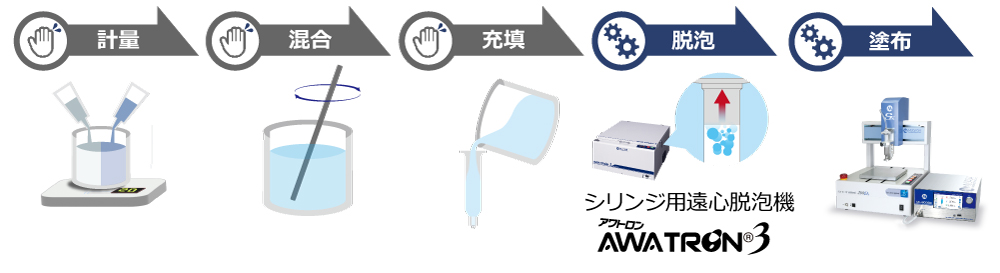
"Automated measuring and mixing," manual filling and "dispensing amount controlled by dispenser"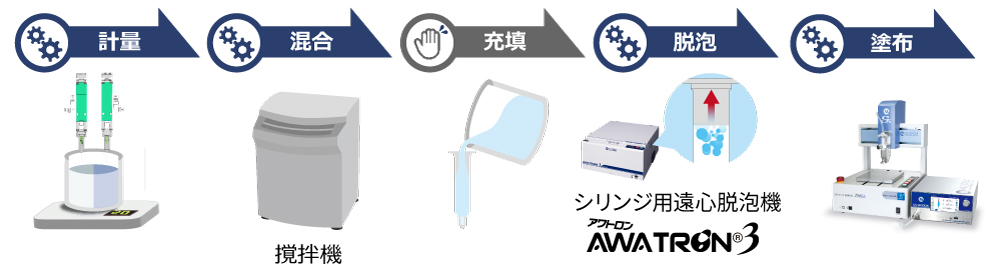
No pre-preparation of "measuring, mixing, filling, and degassing" required!
Musashi Engineering's 2-part system that allows for immediate dispensing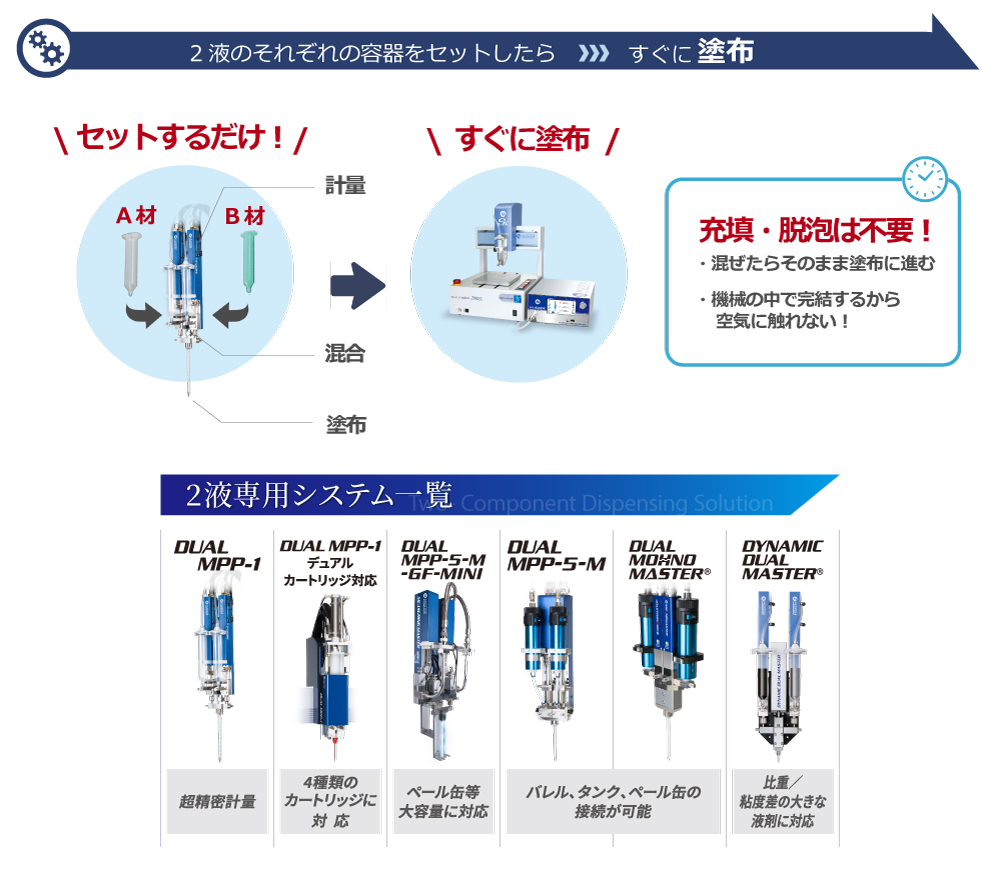
Types and features of 2-part mixing dispensers
There are various types of two-component mixing dispensers, each with its own characteristics and advantages. Musashi Engineering offers the following three types.
Static mixer
- Volumetric metering method
The volumetric metering pump enables strict control of the mixing ratio and high-precision dispensing. The dispensing amount can also be freely set by volume or weight. High-viscosity liquids can also be dispensed.


- Mohno method
Continuous dispensing is possible, and the mixing ratio can be set as desired. In addition, wetted parts can be selected according to the characteristics of the liquid.

Rotary mixer
- Dynamic mixing method
A mixing method suitable for materials with large differences in viscosity or mixing ratios. The mixing ratio can be set by volume or weight.


JET System
- This type does not require a mixing unit (mixer). It is recommended when using reactive 2-part adhesives.

Key points for choosing a 2-part mixing dispenser
When choosing a two-component mixing dispenser, it is important to fully understand the product's mechanism and structure, while also prioritizing application specifications such as dispensing speed, dispensing volume, and shape, in addition to compatibility based on the intended use and materials used. When selecting a product or determining specifications, we recommend consulting with a reliable dispenser manufacturer or specialized engineer and trying out an actual product demonstration.
Musashi Engineering has a track record of implementation in various fields and industries, and we also offer dispensing tests and the loan of demo machines. If you are considering introducing a two-component mixing dispenser or solving issues in your current work process, please feel free to consult with us.
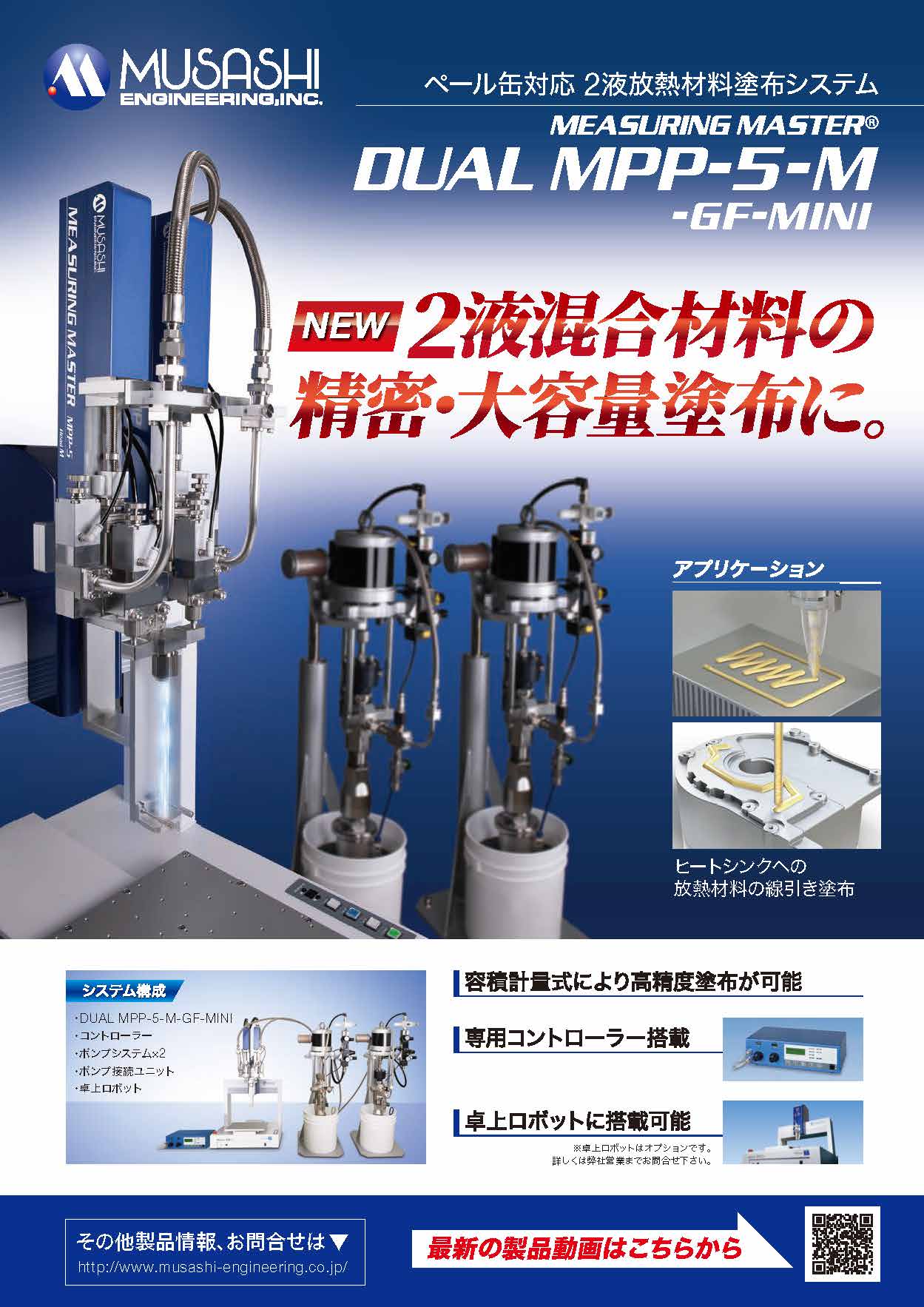
Recommended Catalogs
Two-component Dispensing Solutions

DUAL MPP-5-M-GF-MINI
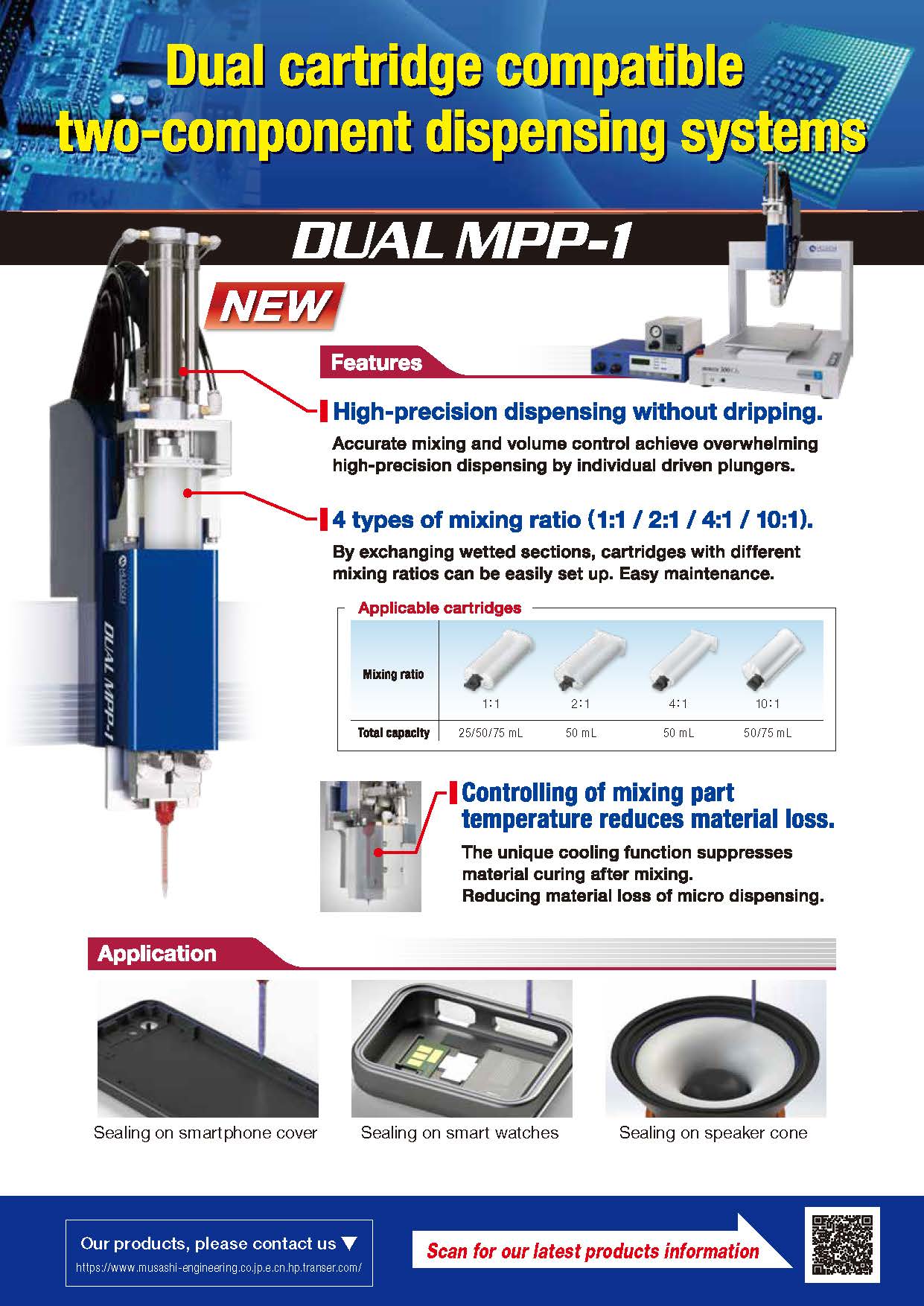
Dual MPP-1
DYNAMIC DUAL MASTER