
Thermal Management for Evolving Electronic Devices | The Role and Selection of Thermal Interface Materials (TIM)

About this article
This article explains the challenges in thermal management, as well as the types and selection of heat dissipation materials.- Thermal management using heat dissipation materials
- ・Risks caused by temperature rise
- ・Surface irregularities and thermal resistance
- The role of TIM (Thermal Interface Material)
- ・Types and characteristics of TIM
- ・Comparison of fillers
Thermal management using heat dissipation materials
With the increasing performance and miniaturization of electronic devices, the rise in heat generation has become a challenge. Since even a slight temperature increase can lead to performance degradation and an increased risk of failure, it is necessary to manage heat across the entire system, from chips to boards and heat-generating components.
Thermal management materials play a crucial role in improving heat flow and supporting stable operation.
Risks Caused by Temperature Rise
The lifespan of electronic components is significantly affected by temperature changes. Continuous exposure to high temperatures accelerates degradation, shortening the usable life of the component. Furthermore, the accumulation of thermal stress and thermal fatigue due to thermal cycling makes components prone to damage, and even a temperature change of just a few degrees can increase the likelihood of failure.
By using thermal management materials, you can reduce thermal resistance caused by microscopic gaps at contact surfaces, thereby mitigating these risks.
Surface Irregularities and Thermal Resistance
The surfaces of heat-generating components, such as heating elements and heat sinks, have microscopic irregularities. Components only touch at a few protruding points, with air occupying the rest of the space. However, since air is a poor conductor of heat, using them in this state causes the overall temperature to rise significantly. As devices become smaller, the contact area between components also decreases, making innovative countermeasures even more important.
Without Heat Dissipation Materials
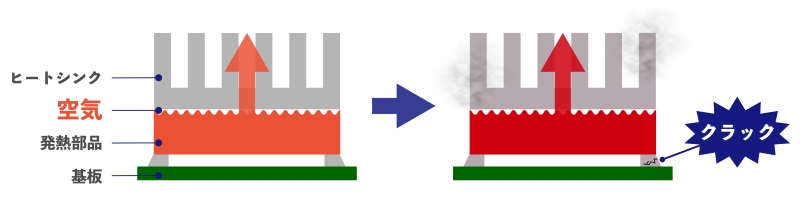
Air resistance causes temperature to rise
leading to degradation and failure
With thermal interface materials
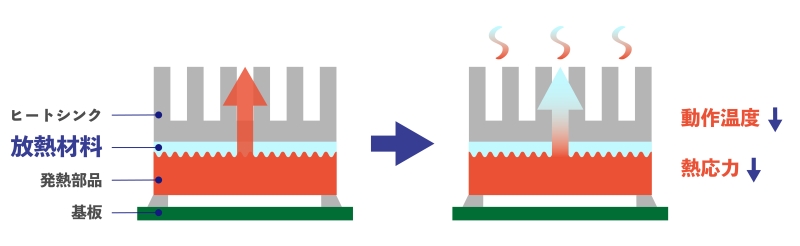
Incorporating thermal interface materials
facilitates heat flow
Thermal management materials are mainly divided into liquid types and solid types.
| Category | Representative examples | Advantages | Disadvantages |
|---|---|---|---|
| Liquid | Thermal grease, thermal gap filler, thermal adhesive | Easy to automate, high adhesion | Requires management of uneven application, risk of dripping |
| Solid | Thermal sheet, metal sheet, graphite sheet | Accurate thickness control, simple installation process | Higher material costs, low design flexibility |
In recent factory lines, there has been a significant increase in the use of dispensers to automatically apply "liquid thermal management materials" in order to reduce labor costs and stabilize precision.
Benefits of using liquid thermal management materials
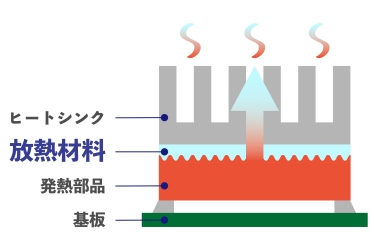
・Almost no reaction force from the thermal interface material to the components during assembly
・No gaps are formed on the contact surface, resulting in high thermal conduction efficiency
・Can accommodate different workpiece shapes simply by changing the dispensing program
The role of TIM (Thermal Interface Material)
TIM is a general term for thermal interface materials, which are materials used to fill the microscopic gaps between electronic components and heat-generating parts. They are made by mixing fillers (thermally conductive powders) into a base heat-dissipating material to conduct heat.
There are several types of TIM, including grease, sheets, gels, and adhesives, and by using them to fill in irregularities, heat is allowed to flow across the entire surface.
If you judge a TIM solely by the values published by the manufacturer when selecting one, there are frequent cases where the temperature does not drop to the target level during actual operation. How much heat actually flows is determined by implementation methods and environmental conditions, such as the thickness of the TIM, bonding pressure, dirt or scratches on the contact surfaces, and changes over time.
Therefore, caution is required as performance varies significantly depending on the usage conditions.
Types and Characteristics of TIM
| Typical processes | Advantages | Disadvantages | |
|---|---|---|---|
| Grease | Coating, filling | High conformability, suitable for thin-film coating. Excellent adhesion to uneven surfaces. |
Performance is highly dependent on the coating amount, so precise control is essential. Thermal resistance tends to increase due to pump-out. |
| Sheet | Applying, installing | Easy to ensure and control thickness. Installation is complete just by sticking it on. |
Difficult to conform to irregularities on the surface being applied to. Less adhesion than liquids, making it prone to air entrapment immediately after application. |
| Gel/putty | Coating, backfilling, molding | Capable of handling complex shapes and localized irregularities. High design flexibility. | There are types that remain viscoelastic without curing and types that cure later, so they must be used appropriately. |
| Adhesive (curing type) |
Application, bonding, curing | Since it can achieve both component fixation and heat dissipation simultaneously, it is effective for thinning and preventing loosening due to vibration. | Reworkability is low, making replacement or repair difficult. Curing shrinkage can lead to cracking or peeling. |
Most of the above are manufactured using resin as a base.
Resin-based TIMs enhance thermal conductivity by mixing in ceramic powders (such as alumina or h-BN) as fillers (thermally conductive powders), but the higher the filler content, the higher the viscosity, making application and molding difficult. To solve this problem, it is important to balance filling properties and fluidity by combining multiple particles of different sizes and shapes.
Comparison of Fillers
| Filler | Application | Advantages | Disadvantages |
|---|---|---|---|
| Alumina (Al2O3) |
Devices requiring standard heat dissipation, such as smartphones and PCs. It is particularly suitable for mass-produced products where cost efficiency is important. | Fluidity is maintained even when mixed at high concentrations, allowing it to support various TIM forms. | Performance tends to vary depending on particle size and purity, so selection based on the application is necessary. |
| Hexagonal boron nitride (h-BN) |
Suitable for environments where both electrical insulation and high heat dissipation are essential, such as power devices (automotive). | Achieves both high heat dissipation and electrical insulation. It is easy to knead and handle. | Due to its high lubricity, surface treatment is required to ensure adhesion. Material costs are high. |
Our recommended dispensers
| Liquid thermal interface material | Thermal gap filler |
Thermal grease | Sintering paste |
Liquid metal |
|---|---|---|---|---|
| Curing | 1-component/2-component curing type | 1-component non-curing | Curing (sintering) | Non-curing |
| Thermal interface material | Alumina, etc. | Alumina, etc. | Ag/Cu, etc. | Gallium, etc. |
| Recommended dispenser |
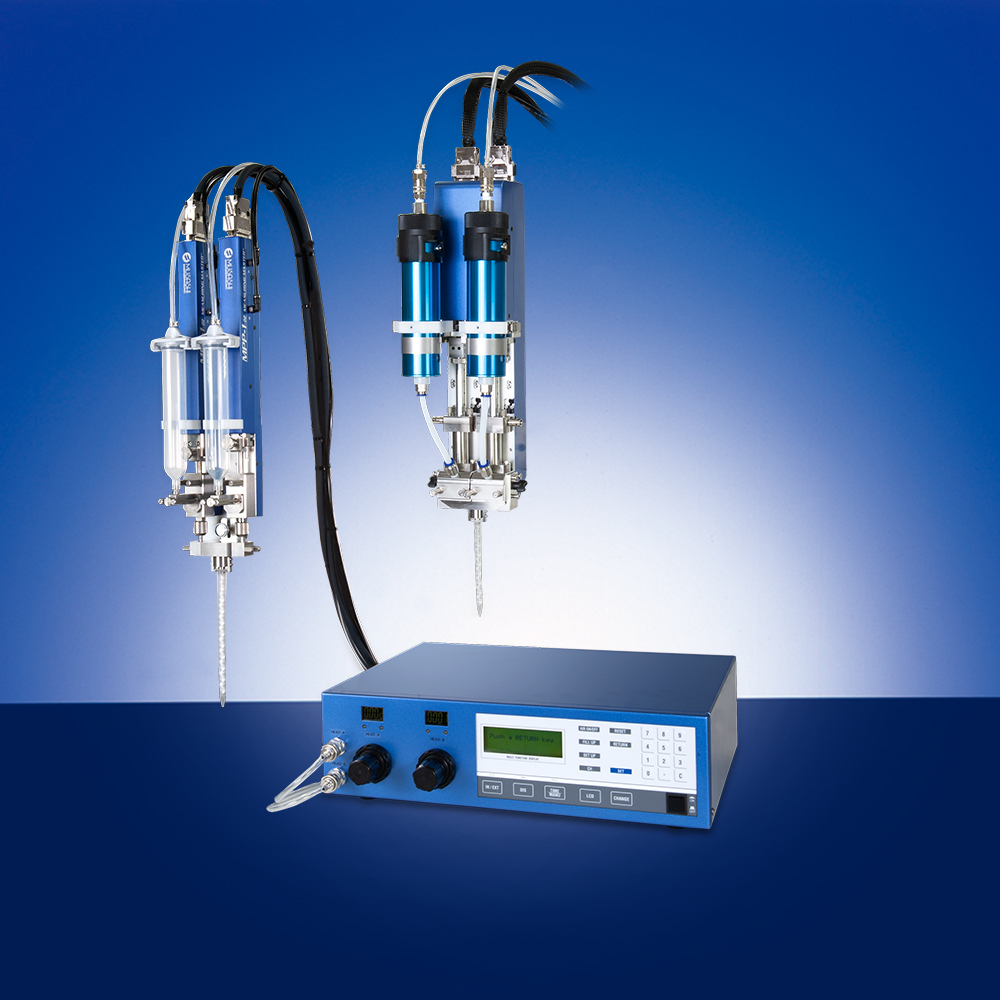 DUAL MPP Series 2-Part Volumetric Metering Digitally Controlled Dispenser |
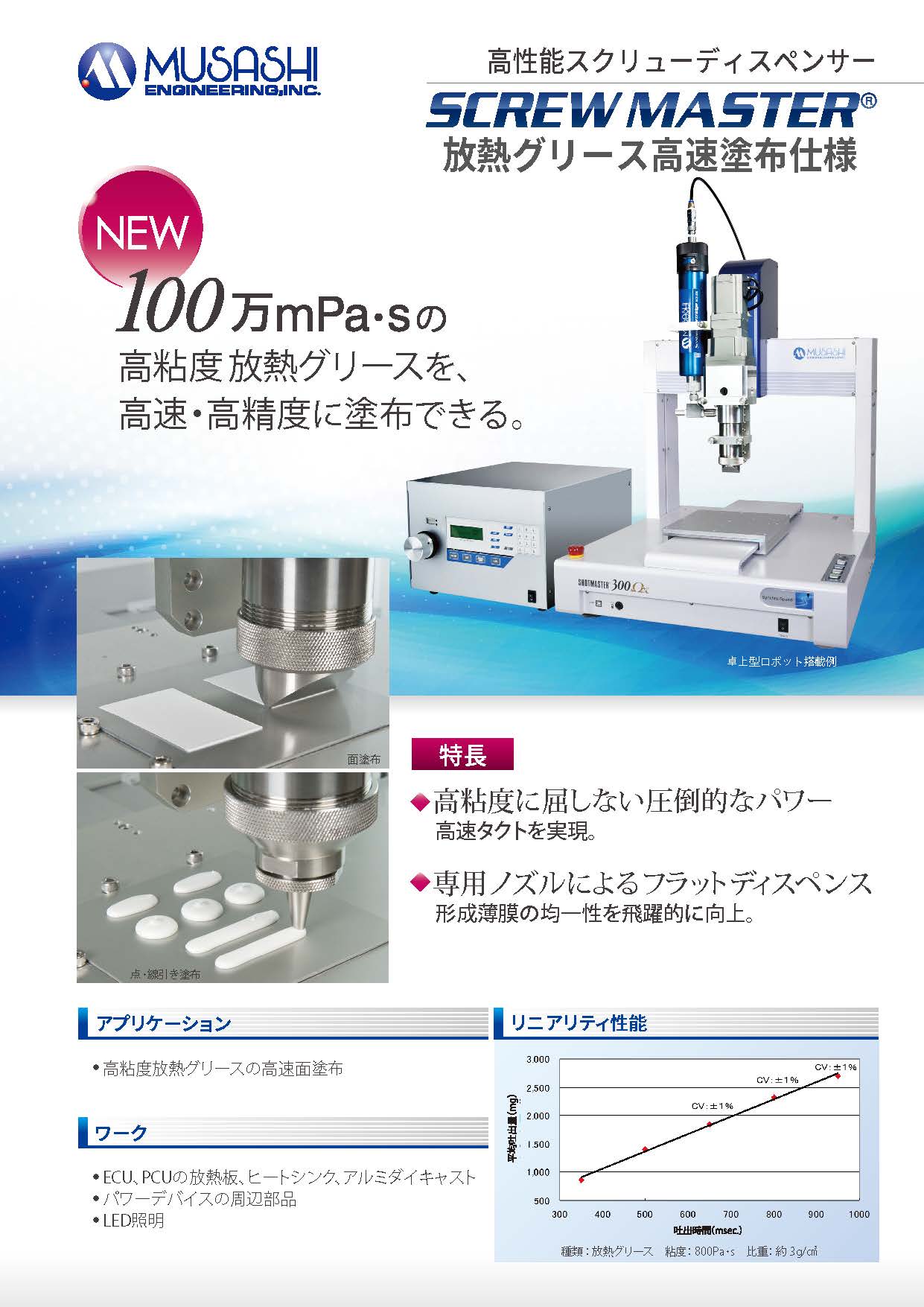
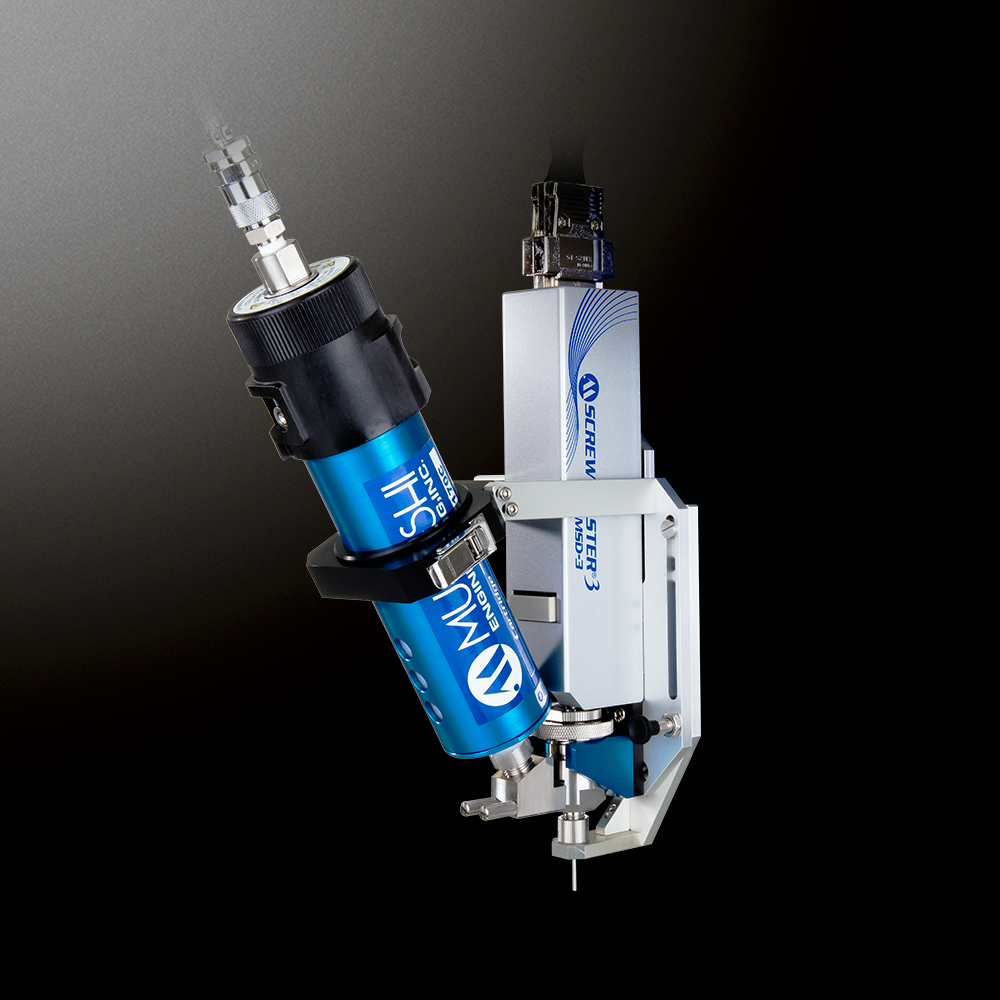 High-Flow Screw Dispenser SCREW MASTER MSD-3-HF |
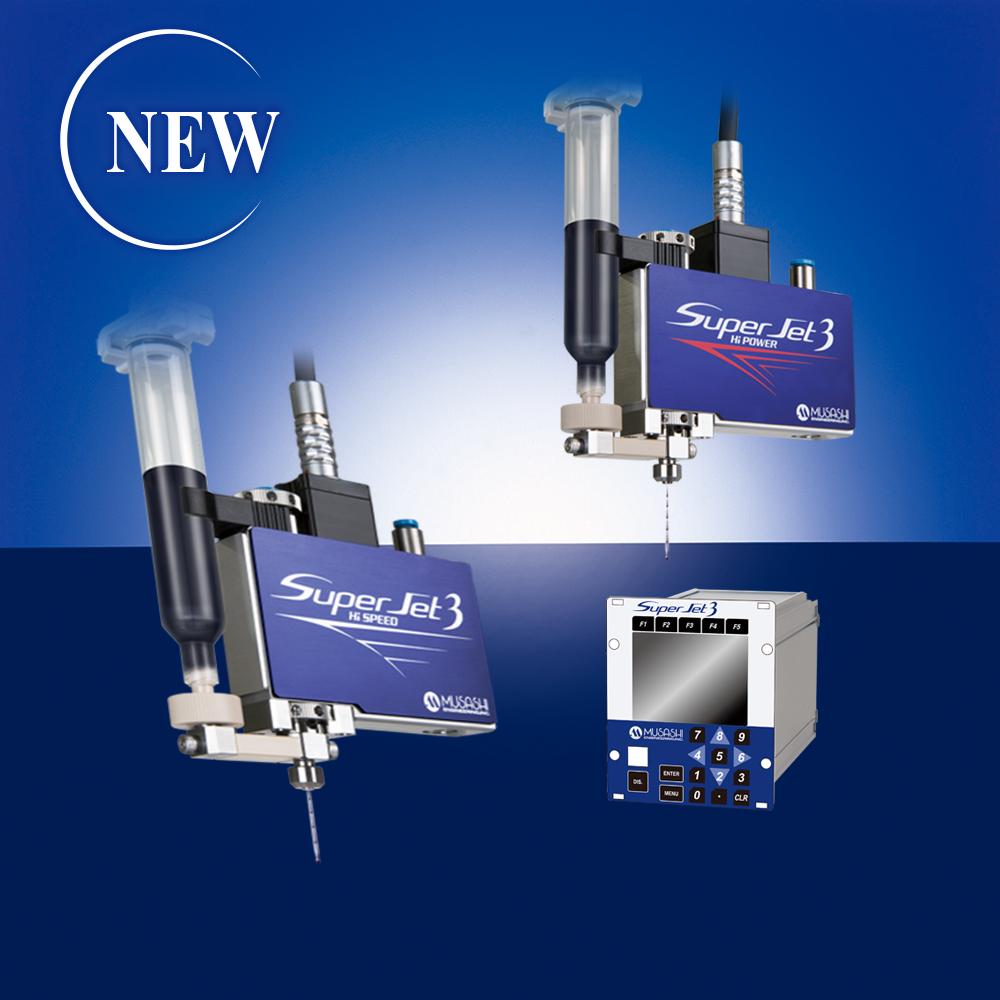 Ultra-high-speed, non-contact jet dispenser SuperJet3 |

For details on how to select a dispenser, please refer to the catalog below.
Recommended Catalogs
Thermal Management (Thermal Interface Materials)
Solutions
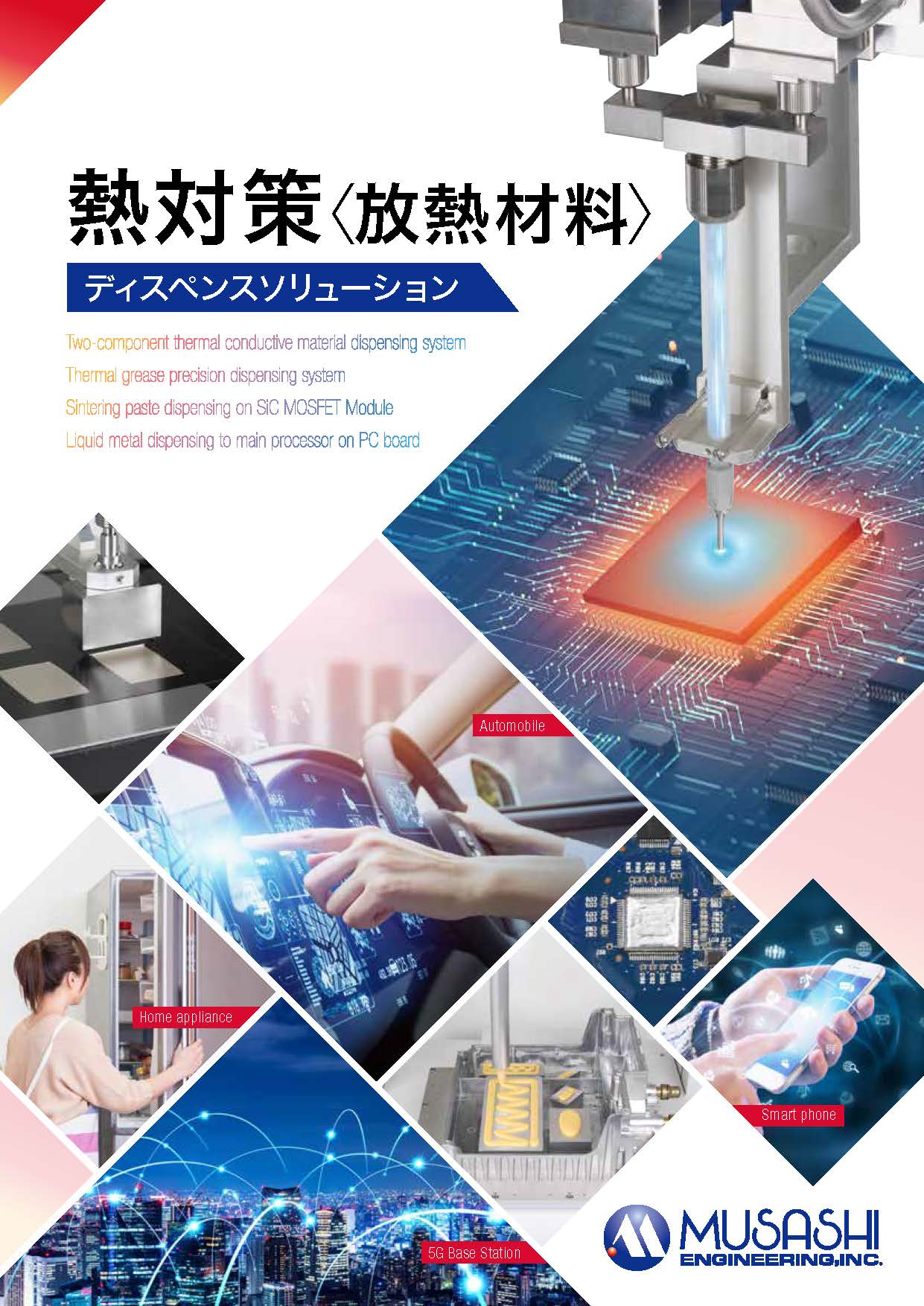
Selection points for heat dissipation materials by application
Smartphone/PC
| Problem | Because high heat is concentrated in a limited space, the temperature tends to rise, increasing the risk of performance degradation and failure. |
|---|---|
| Solution | To efficiently dissipate heat by shortening the distance from the heat source to the housing, TIM materials that are thin-film and have high adhesion are essential. |
| Typical thermal interface materials | Smartphone: Thermal grease PC: Liquid metal, liquid metal thermal gap filler, thermal grease Click here for liquid metal application case studies |
Automotive
| Problem | In environments with engine vibration, road vibration, or temperature changes, pump-out or cracking can occur, leading to an increase in thermal resistance. Furthermore, high voltage is applied to the heating elements of power devices, so there is a risk that if the TIM is damaged and comes into direct contact with the heating components, electricity will flow and cause a short circuit. |
|---|---|
| Solution | It is important to select a TIM material that has high insulation properties and durability that will not break down even at higher voltages, and to maintain stability over time and in high-temperature and high-humidity environments. |
| Typical thermal interface materials | Thermal gap fillers, thermal grease, and sintering paste |
Common challenges for each application
What is common and necessary is to confirm in advance whether the selected thermal interface material can be reliably applied in the mass production process.
Since variations in application conditions, such as the amount and position of application, affect the final quality, it is important to verify the feasibility when selecting materials.
Summary
With the increase in power consumption due to the evolution of AI, the importance of heat dissipation measures is growing.
We will support you with our application technology to make the most of the performance of thermal interface materials. Please feel free to contact us if you have any questions or consultations.
Recommended Catalogs
Thermal Management (Heat Dissipation Materials)
Thermal Management (Thermal Interface Materials)
Solutions
Screw Dispenser
Thermal grease
screw
dispenser
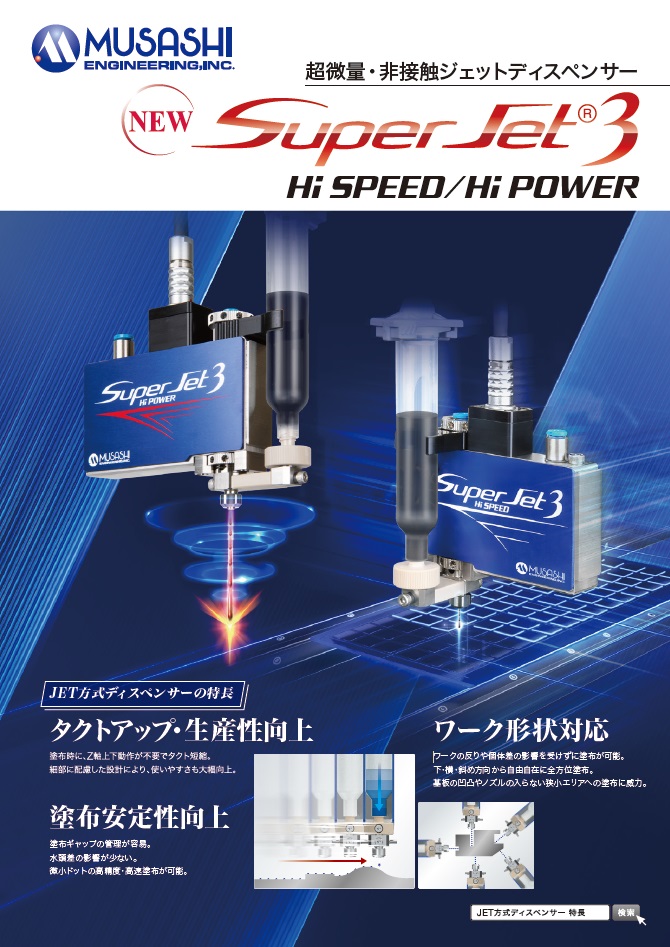
SuperJet
SuperJet3
Two-component dispenser
2-component dispensing
solution